SpaceX Has Listed, and You Likely Already Own It

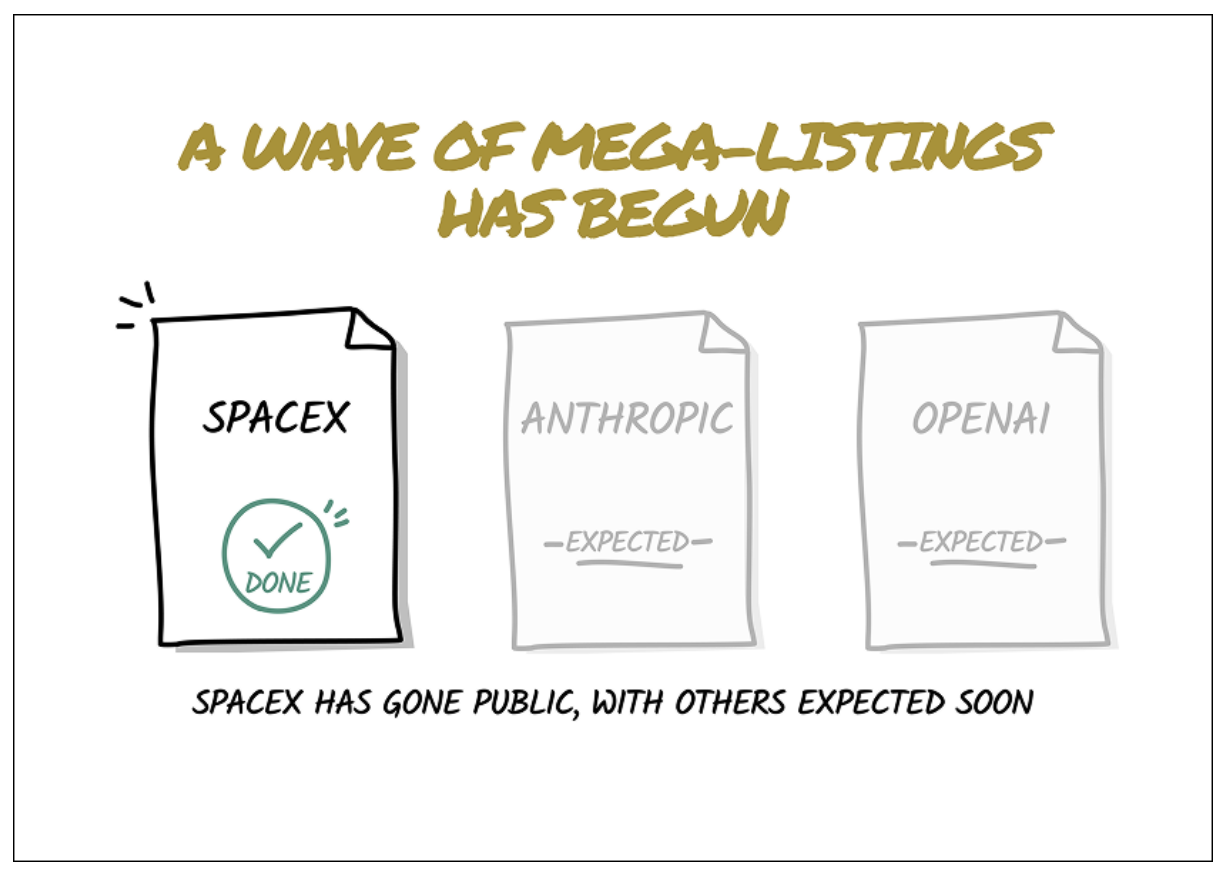
SpaceX listed on the Nasdaq stock exchange on 12 June at a valuation of around $1.77 trillion, making it the largest Initial Public Offering (IPO) of all time. Before this, the shares of this well-known company were only available to a select group of investors.
As often happens, the share price rose in the days after listing and has since settled somewhat lower.
Many investors now own SpaceX without even knowing it or deciding to. If you hold a globally diversified portfolio, it’s very likely that SpaceX shares will be added to your portfolio within weeks of the listing.
The headline has been about the size of the listing, but we think it’s important to understand why it happened.
SpaceX didn’t grow into the public market over decades, the way Apple or Microsoft did. Companies have been staying private far longer than they used to, and so, for years, much of SpaceX’s growth happened where ordinary public investors couldn’t reach it.
It was listed as one of the world’s largest companies on its first day. It is no longer just a rocket business, either. It runs Starlink, the satellite internet network, and, after a merger earlier this year, it also owns Elon Musk’s AI company. That scale is why the major index providers changed their own rules to let it in so quickly.
How an IPO works, and why you likely already own it
An IPO is the first time a private company sells its shares to the public. The people selling are usually early backers and employees, turning years of paper value into cash. That is worth remembering whenever a listing is described as a rare chance to buy in. Someone is choosing that same moment to sell.
New listings often move sharply in their first months, and the direction is hard to read in advance. An early jump reflects demand and attention, not necessarily a verdict on the company’s long-term prospects. SpaceX rose in the first days of trading, then drifted lower as early demand settled, but neither move tells us much about where the business will be in a decade or longer.
Long-term investors do not need a view on whether SpaceX is brilliant or overpriced. If you are globally diversified, you own it at its market weight. By the time you read this, SpaceX will have been included in many of the large global indices, with a few others still to follow. To add it so quickly, some providers eased long-standing rules. The S&P 500 is the exception because it requires a company to be profitable first, so certain investors may not own it for some time.
More of these are coming
Based on current reporting, there may be a few more of these mega-IPOs coming. AI giants Anthropic and OpenAI are both reported to be preparing for listings soon, with each among the world’s most valuable companies.
The lessons for these IPOs will be the same. Very large private companies are entering the public markets, and a diversified investor doesn’t have to decide whether to buy in. They come to own each company as it joins the indices their funds track.
And so, for most globally diversified investors, a listing like this calls for no particular action. There’s a good chance you already hold it, and the same will be true of the next name everyone is talking about.
If you would like to talk through how any of it applies to your own circumstances, we are always glad to hear from you.
Compliance disclaimers:
The value of investments and any income from them can fall as well as rise. You may not get back the full amount invested. Past performance should be used as a guide only and is not a guarantee of future performance.
Different investors will view these trade-offs differently depending on their objectives, time horizon, and attitude to risk. If you would like to discuss how this relates to your own circumstances, please speak to us.