
The penny drops
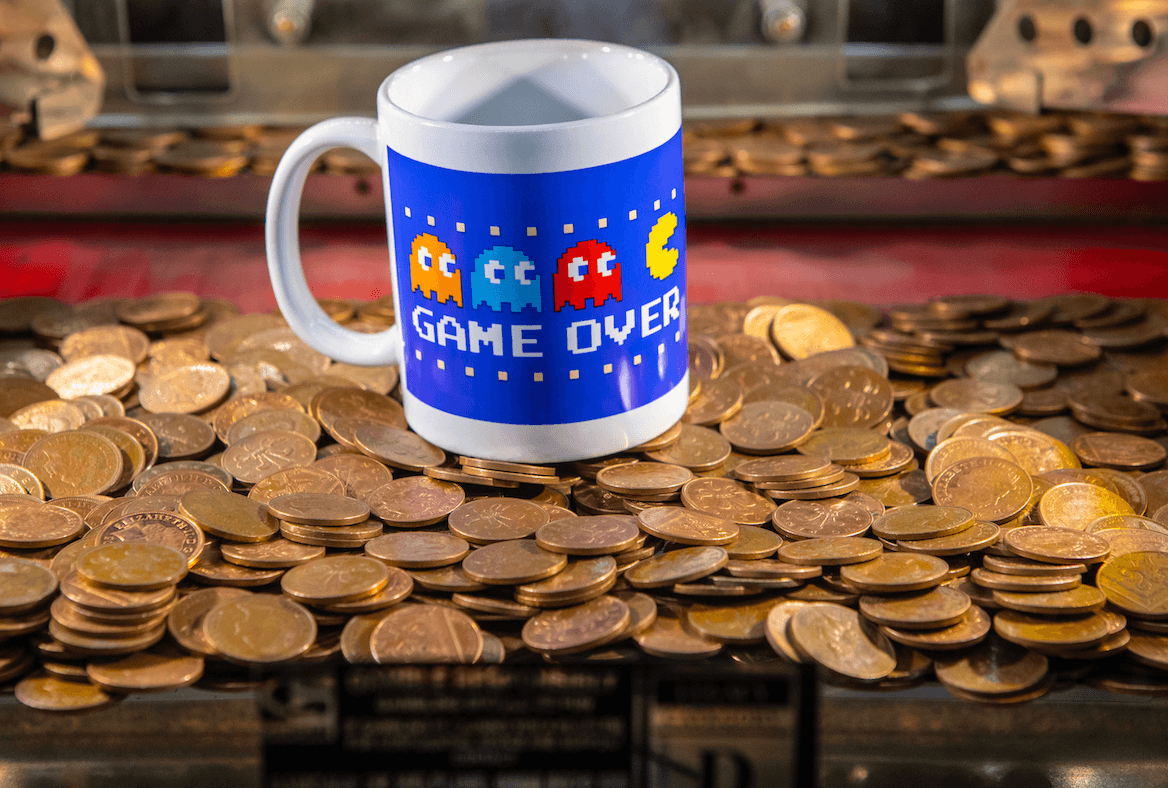
When my daughter Sophie was about five or six, we used to go to the arcades in Bournemouth. Not the flashy ones with the grabber claws and the flashing screens - the old-fashioned penny pushers where you drop a coin in the top and watch it tumble down through the machine, hoping that when it eventually lands somewhere at the bottom, it will be the one to push a little avalanche of 2p pieces over the edge. Bingo.
There’s even a TV game show that does something similar called Catchpoint where a ball is released from up high after a question is answered correctly – the other person has to catch it but has no idea which out of 10 trapdoors above it’ll fall out from. It’s compelling because it’s 100% certain the ball will make it to bottom, just like the penny will – that’s gravity – but you had to bet on which of the ten exit points it would land in, you’d be guessing. A one in ten chance.
And that – the certainty mixed with sheer uncertainty - tells us quite a lot about how we think about money.
The season of the flutter
We’re in peak gambling season: Cheltenham has just been and gone; The Grand National is round the corner. A friend asked me recently if I was a gambling man - would I put £20 on Spurs or Forest staying up? I declined as I don’t think of myself as a betting man.
And yet, I’m doing the EuroMillions this week. I have no idea why - I have enough already. I could do with a bit more, sure, but I don’t need £34 million. So what am I trying to prove? Would I leave it all to Sophie? And if so, why wouldn’t I just put that £20 on Spurs? One match is a gamble. But over 40 matches, a season, you’d get a better sense of who deserves to go down. The longer the timeframe, the more the luck evens out. Or so it feels.
The Grand National is the same. Do you bet to win, each way, or not at all? Whether it's a 2p coin in a Bournemouth arcade, £20 on Spurs or a decision about your £500k pension fund, the pull is the same - we want to pick the winner, back our instinct, feel like we had a hand in it. But picking a single horse, a single stock, a single shot in a penny machine - that's not investing, that's speculation. And the difference matters.
The handbag problem
A friend of a friend Rose collects Chanel handbags. She bought one for her 50th birthday about ten years ago for £3,500. It’s now worth around £8,000. She’s very pleased about this.
But a pension, quietly doing its thing over the same period, would very likely have grown a lot more than that. Without Rose having to do anything at all. No queueing outside a boutique in Bond Street, no careful storage, no worrying about whether the handles are getting worn or whether moths have moved in.
So why does the handbag feel like a better investment? Because she chose it. She researched it. She stood in the shop and made a decision – she even wore it once or twice. There’s a thrill in that. The pension just sits there, like a radiator – doing its job, but nobody’s writing home about it.
I don’t mind clients who want to buy shares in Bitcoin, or try a bit of this, or put a punt on that. It’s the involvement that makes it feel real. It’s seeing your money in the works, turning the cogs. I’m aware that you can’t get that same buzz watching a pension statement go up by 8% a year.
But sadly what I’ve learned is that the involvement that makes investing feel more exciting is often the very thing that makes it perform less well. Let me explain…
The guilt of doing nothing
I had a client last year with around £1 million invested. Over twelve months, his portfolio gained about £100,000. That’s more than his annual salary. He hadn’t done a thing to earn it. He found the whole thing a bit strange - almost uncomfortable.
And I get that. We’re brought up to believe that effort equals reward. You work hard, you earn money, and that money feels earned. When it just appears – when money makes money – it can feel like you’ve ‘got away’ with something.
People sometimes come to me and say, “My pension is probably rubbish – I haven’t looked at it for years.” And I say, “No, that’s actually a good thing.” Because when we check in too often, we tend to react. Markets dip and we panic. Something's in the news and we want to move money around. We sell the thing that just went down and buy the thing that just went up - which is the opposite of what we should do. The less you fiddle, the better it tends to do. Not always. But generally. It's the involvement that can ruin good investing. But it's the involvement that makes it feel like you deserve the returns.
That tension – between what feels right and what works – is one of the most human things about money. We want to be in the game. We want to feel our hand on the lever, even when the lever isn’t connected to anything.
Let it fall
There’s an Oscar-nominated animated short on Disney+ at the moment called Retirement Plan. It’s only seven minutes long. In it, a man called Ray lists all the things he’ll do when he retires – writing poetry, growing veg, learning languages, taking up adventure sports. The list goes on and on. It’s funny. And then it’s not. Because the point isn’t the list. The point is that we spend so much time planning for the future that we forget to notice the present.
And investing is the same. We fiddle when we should leave it alone. We chase the thrill of picking a winner when the quiet, diversified growth was doing the hard work all along. Rose’s handbag might be worth £8,000, but a pension would have done better without the effort. My client gained £100,000 by doing nothing at all. The coin always reaches the bottom. You don’t need to choose the right slot or the best time to play – you just need to let gravity do its work.
The coin always reaches the bottom. Let it fall.
If you’d like to talk about your investments, your pension, or just the strange guilt of doing nothing while your money does the work, please get in touch. I’m always happy to chat.